Line extensions
& new service.
New buildings, subdivisions and commercial sites need new utility service. In California, SCE and other utilities let the applicant hire a qualified contractor for parts of the work. GDV Utilities builds those parts to the utility's design and inspection.
What we do
Crews and equipment scaled to the job, from a single crew to multi-crew programs.
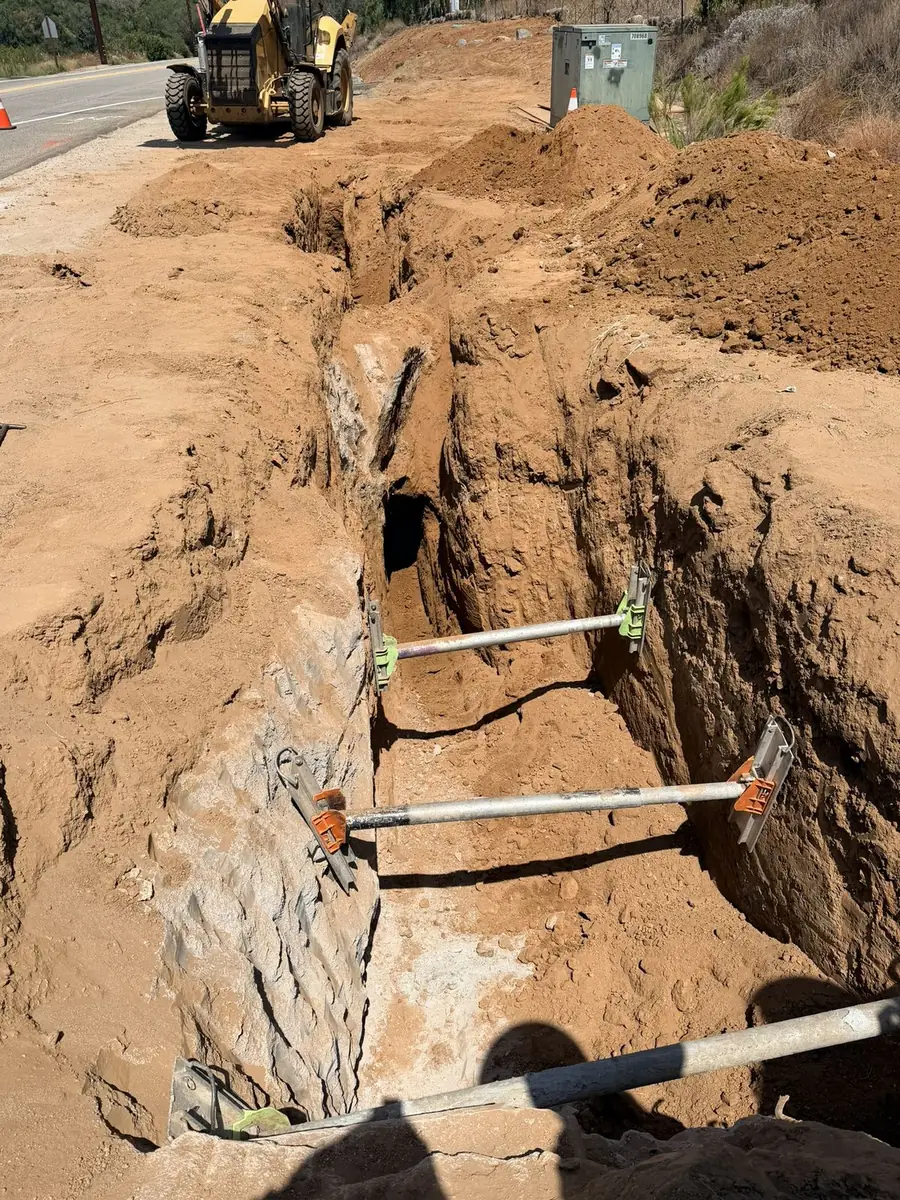
Trench and backfill
Excavation, bedding, backfill and compaction to the utility's specifications.
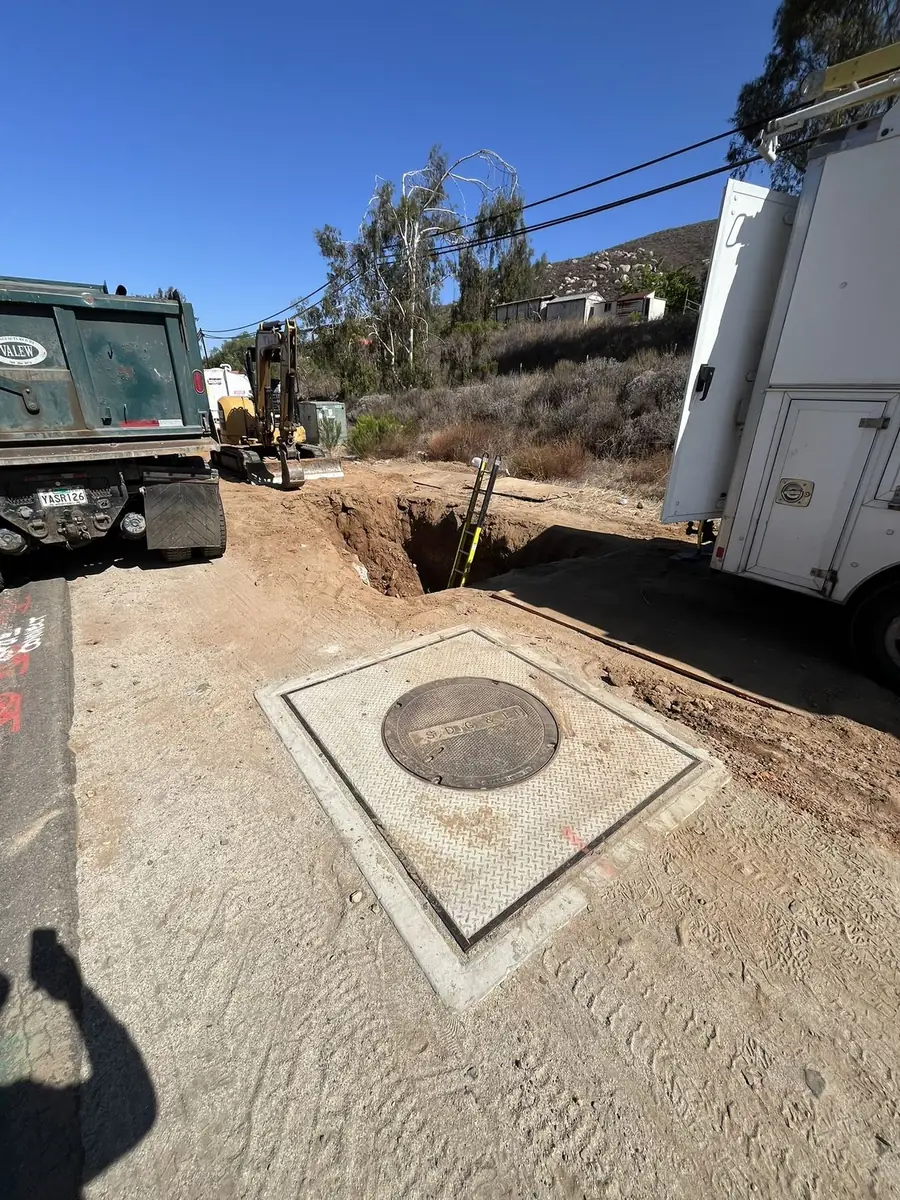
Conduit and substructures
Utility conduit, vaults, pull boxes and pads, built to the utility design and deeded to the utility.
Protective structures
Bollards, walls and other protection the utility requires around its equipment.
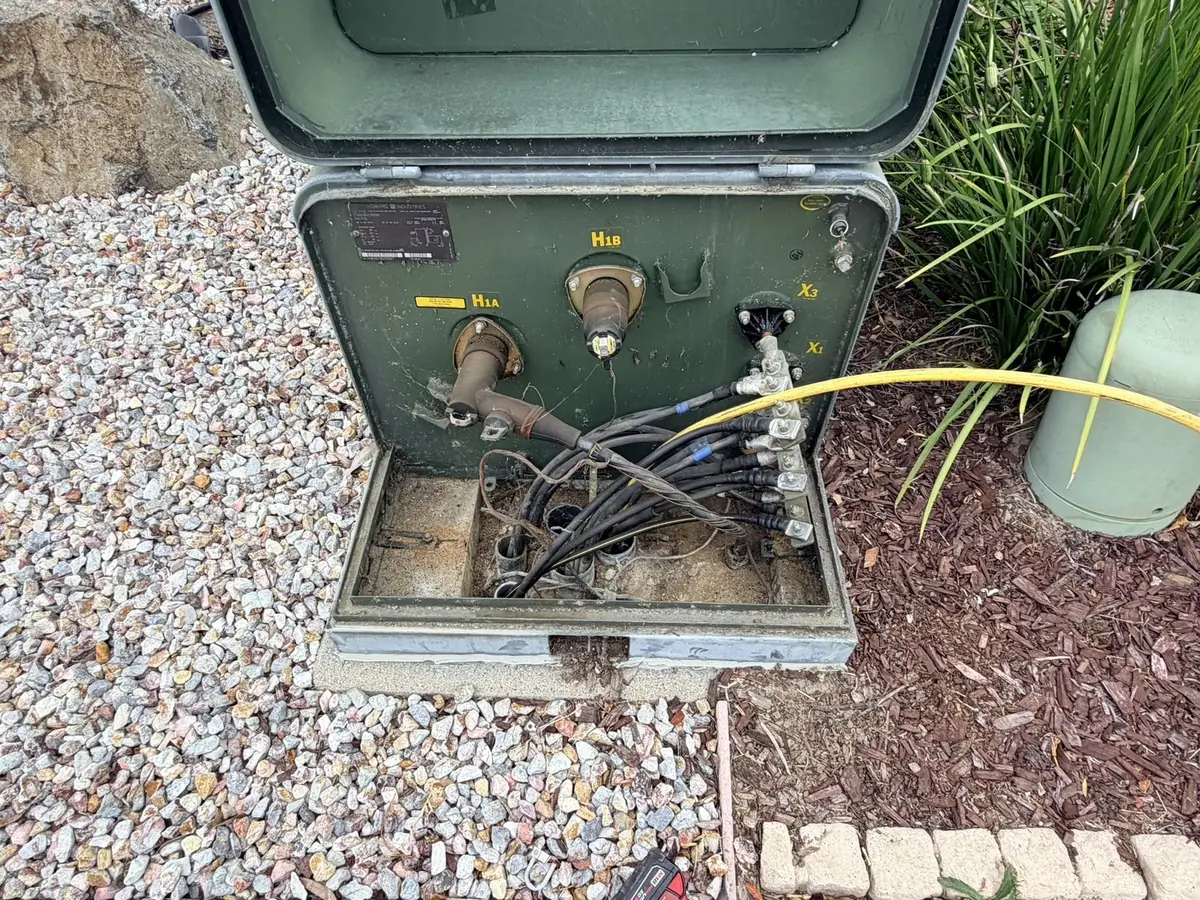
Customer-side service
Service conductors, meter pedestals and switchgear connections on the customer side.
Temporary power
Temporary power poles so construction can start before permanent service is energized.
Inspection coordination
Scheduling utility inspections and correcting punch items so energization stays on track.
What the utility allows
Under California's line and service extension rules, applicants can usually choose between paying the utility to do certain work or having it done by a qualified independent installer. SCE's customer guide lists trenching, excavation, backfill and compaction, distribution conduit and substructures, and protective structures such as fences and retaining walls as work the applicant may install and then deed to the utility. Utility crews generally furnish and install the cable and make the final connections.
Rules and options differ by utility and change over time, so we confirm the current requirements with your utility's planner for every job. Our role is to build the applicant work right the first time and pass inspection.
Schedule and cost control
Doing the applicant work with your own contractor can shorten the schedule and give you more control over cost, because the trench and substructures can be built alongside the rest of your site work instead of waiting for the utility's crews.
Our crews at work
Built by line people
GDV Utilities is led by people who came up in the trade and know what it takes to run safe, productive crews in the field.
IBEW union crews
Signatory to the Outside Line Construction Agreement, with IBEW-trained Foremen, Linemen, Operators and Groundmen.
Safety first
Daily tailboards, stop work authority and work practices aligned with Cal/OSHA High Voltage Electrical Safety Orders and GO 95 & 128.
Built for overhead work
Bucket trucks and digger derricks for setting poles and framing, with pole and wire trailers to keep material on site.
Licensed in 3 states
CA Lic. A & C-10 #1163710 · AZ Lic. A & C-11 ROC #345427 · NV Lic. C-2 #0093534.
Our crews have worked on utility systems across the country, including:










 Pasadena Water & Power





 NV Energy












 PECOBGEAtlantic City Electric




 O&R








…and most utility systems across the U.S.
Common questions
What is Rule 15 and Rule 16?
They are the California utility tariff rules for distribution line extensions (Rule 15) and service extensions (Rule 16). They set what the applicant pays for, what the utility installs and what the applicant can have a qualified contractor install.
What work can my contractor do on a line extension?
For SCE, the customer guide lists trenching, excavation, backfill and compaction, distribution conduit and substructures, and protective structures as applicant-installable work. Cable is generally installed by the utility. Check with your utility for its current rules.
Do you work with utilities other than SCE?
Yes. We build applicant work for SCE, PG&E, SDG&E and municipal utilities, following each one's design and inspection process.
Can you also provide temporary power?
Yes. We install temporary power poles so construction can start while permanent service is being designed and built.
Need a crew?
Tell us about your project or storm call-out and we'll respond quickly. For the fastest response, give us a call.